What Is VEED? A Look Inside the AI Video Creation Platform


Key takeaways
- VEED is an AI video creation platform built to grow your brand on social.
- You describe a video, generate it, then make it yours with your branding, subtitles, and voice in the same workspace.
- Most tools stop at generating. VEED keeps going, and that is the part that decides whether a video is worth posting.
- Millions of marketers and founders use VEED, including 72% of the Fortune 500.
- There is a free plan to start with. Paid plans give you access to various features, including AI generation, which runs on credits.
VEED is an AI video creation platform built to grow your brand on social. Describe the video you want, generate it, and then make it yours with your branding, subtitles, and voice, without leaving the workspace. Most AI video tools stop at the generation step. VEED keeps going. Millions of marketers and founders use VEED, including 72% of the Fortune 500.
Getting footage out of a model is the easy part now. Getting footage that looks like your brand made it, and not like every other AI video in the feed, is the deciding factor on whether anything actually goes out under your brand name.
Here is what is inside VEED, who uses it, and how the workflow runs from start to finish.

What VEED is:
VEED is an AI video creation platform that takes you from an idea to a finished, post-ready video in one place.
You start by describing what you want. A product demo. A founder talking to the camera. A 30-second ad for a launch. VEED generates it. Then you shape what comes back until it is right: your colors, your fonts, your subtitles, your voice, your pacing, and your logo. When it looks the way it should, you export it in the aspect ratios the channels need.
All of it happens in the browser. You don’t have to export it halfway through, re-upload it somewhere else, and reassemble it. The video you generate and the video you post are the same file, worked on in the same workspace.
The differentiator, stated plainly: Most AI video tools stop after video generation. They hand you raw footage and consider the job done. It isn't. Raw generated footage is maybe a third of the work, and the two-thirds it skips are the two-thirds your audience actually notices. VEED keeps going.
Who VEED is for:
VEED is for people who need more video than they can realistically make and cannot afford for it to look generic.
Mostly, VEED is for the marketing generalist at a growing business. One person, sometimes two, is responsible for video across every channel. No production budget, no studio, no dedicated video hire, and a content calendar that does not care how small the team is. They already know AI is the answer. They have usually tried it and found the output not quite good enough to post under the brand's name.
It is also for solopreneurs and founders doing everything themselves. They have a story worth telling and no one to hand it to, and the video has to feel like their brand with their voice and not like a template.
The pattern shows up clearly in our research with more than 800 senior marketers: 98% say video is essential to their strategy, only 38% feel confident creating it, and 83% do not know where to start. The demand is settled. The confidence is not.
And confidence has a high impact. The goal is creating videos credible enough that they earn attention, and attention that turns into qualified leads and sales. Video builds trust. Trust is what converts, and output that looks like everyone else's AI video builds neither.
What's inside VEED:
VEED is organized around three things you do to a video: generate it, make it yours, and get it out.
Generating
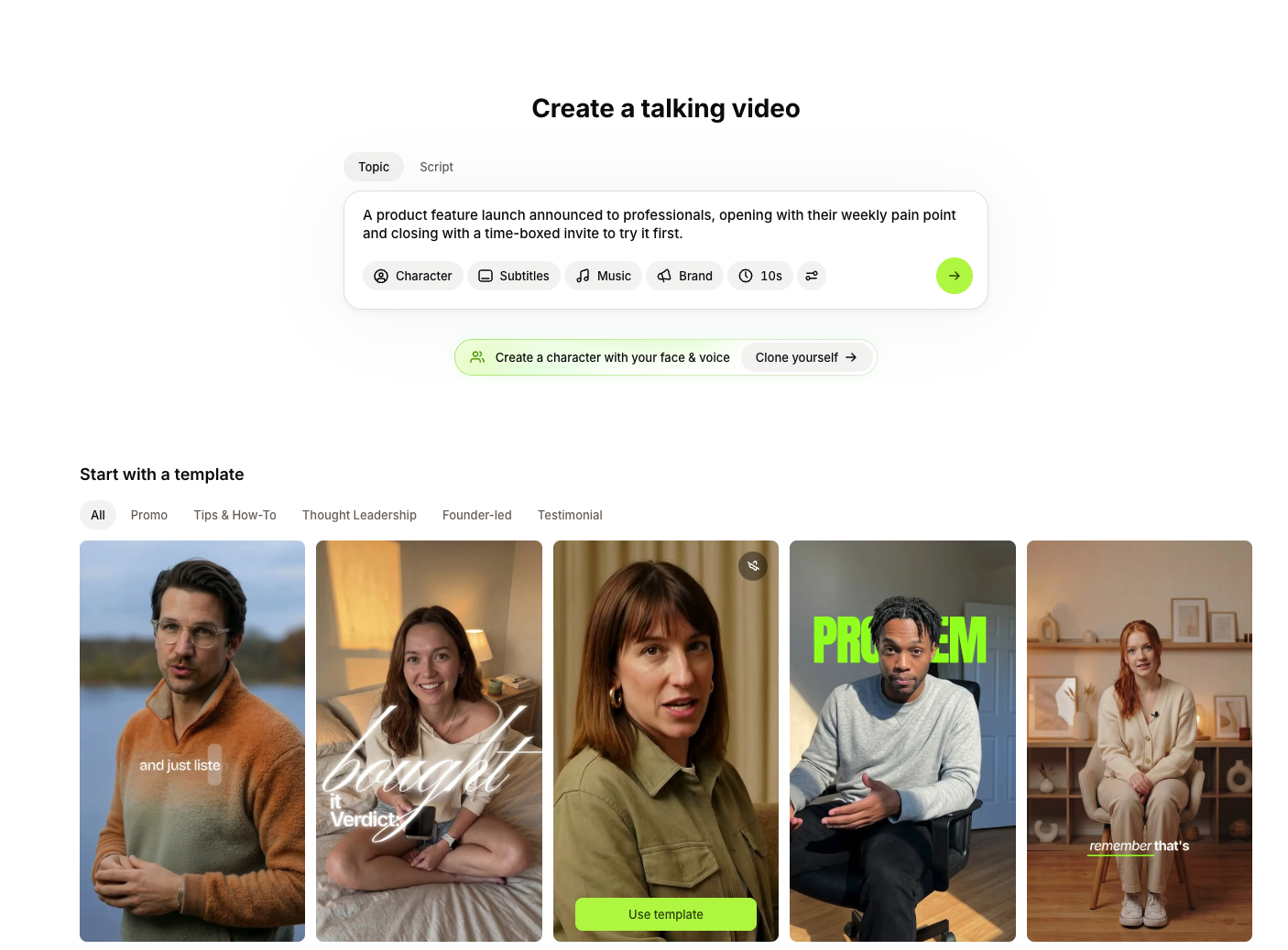
You describe the video, and VEED makes it.
The prompt can be short when you know the vibe but not the details. It can be a full script when you know exactly what needs to be said. Either way, VEED's AI video generator runs your input through the latest frontier models and returns footage you can work with.
The range matters more than it sounds. Sometimes, you have a rough idea and need something to react to. Sometimes you have an approved script from a client, and every line is locked. Being able to generate a video from a script or a prompt means you are not compromising your ideas to make up for the tool’s limitations.
Making it yours
This is the part most tools skip, and it is where a generated video becomes your video.
Nothing is final on the first pass. If a shot is wrong, reprompt it. If the pacing drags, tighten it. If the voice is not the voice you want, change it. You keep shaping until the video matches what you had in your head, and none of it requires starting over.
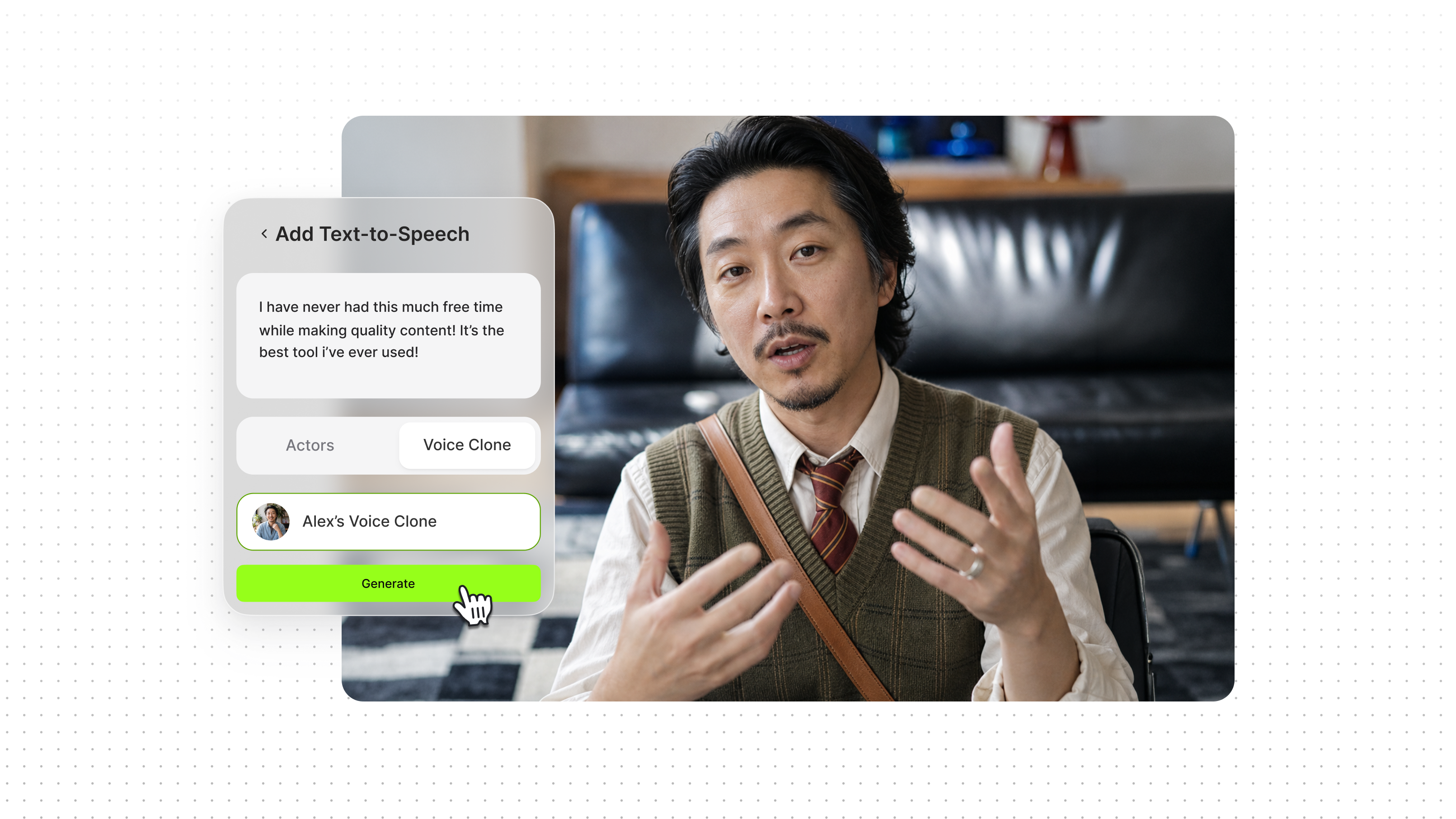
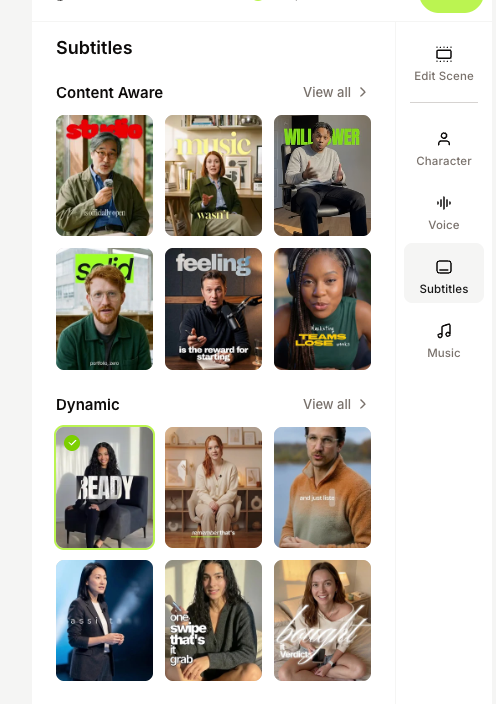
Then come the things that make it recognizably yours. Automatic subtitles get generated for you and styled in your brand's fonts and colors, which matters more than it used to: most social video gets watched on mute, so your subtitles are frequently the first thing anyone reads about your brand. Add your logo. Set your palette. Pick a voice and keep it consistent across everything you publish, so a viewer who sees three of your videos in a week hears the same brand each time.
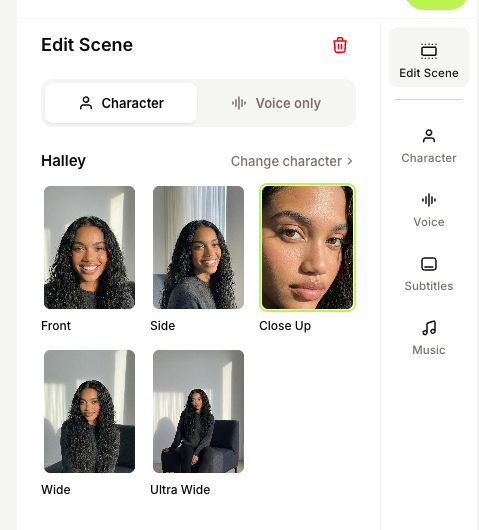
If a talking presenter suits the format, AI avatars are one option among many.
Everything above happens in the same workspace as generation. No export, no re-upload, no version confusion.
Getting it out
One video goes out in every shape the channels need.
Export vertically for Reels, TikTok, and Shorts. Export square for the feed. Export wide for YouTube and the site. You are not rebuilding the video three times to hit three placements, and you are not cropping the good part out of frame to make it fit.
What powers it?
VEED runs on a mix of its own models and the best of what is available elsewhere.
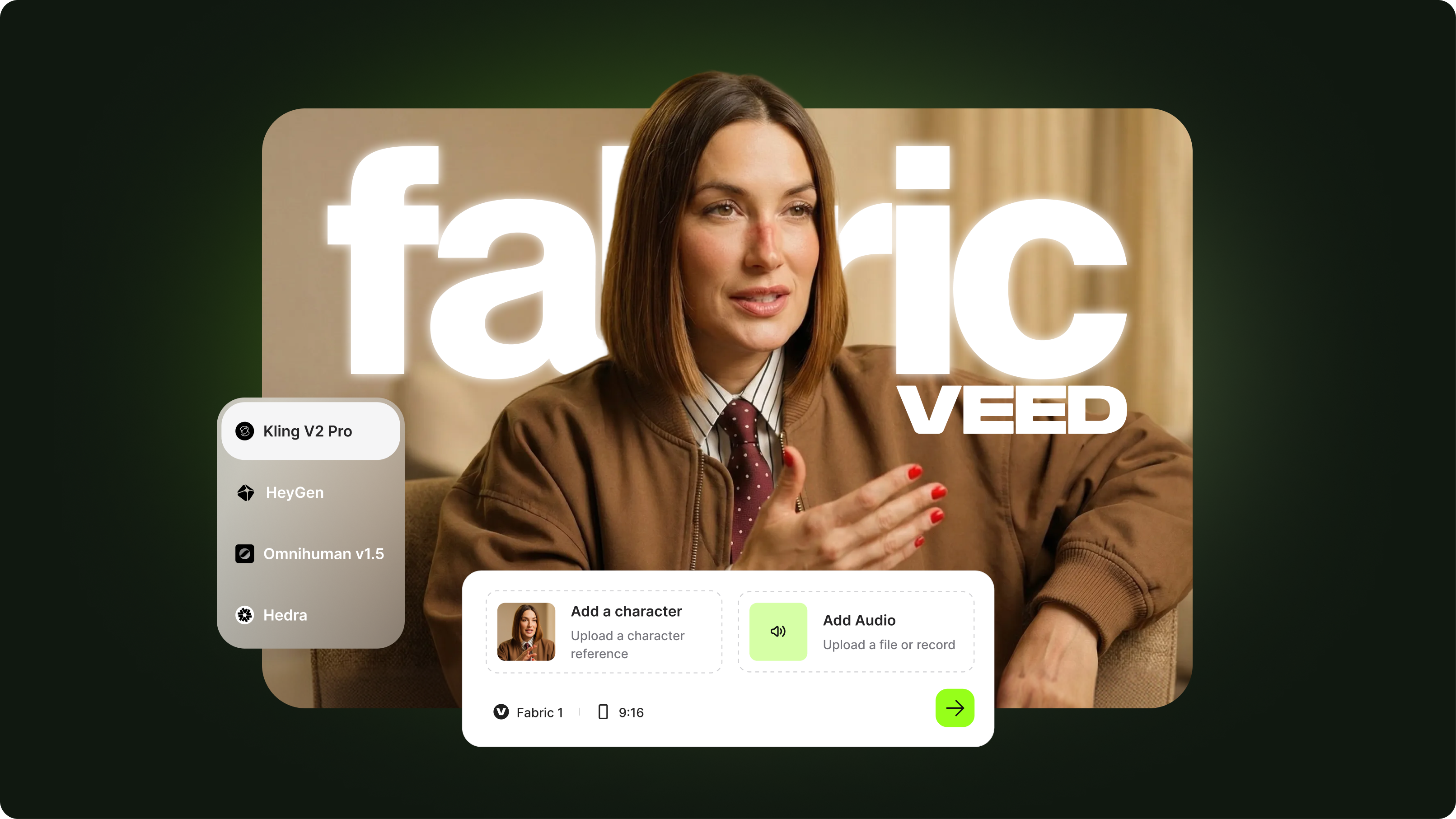
VEED Fabric 1.0 is VEED's own image-to-video model. Give it an image and audio, and it animates the image into a talking video. The useful part is that it does not require a fixed catalog of stock presenters. A product mascot, a founder's photo, and an illustration in your brand style—all of them work, which is how you get a talking video that looks like it came from your brand.
Alongside that, VEED gives you access to the latest frontier models in one workflow, so you are not chasing whichever model launched this month across five different platforms. If you want the wider view of what is out there, we keep a running comparison of the AI video generators worth using up to date.
VEED's technology also runs inside other creative products through its APIs. That is worth knowing for the same reason any infrastructure fact is worth knowing: other companies building video features chose to build them on VEED.
What people make with VEED:
The formats that come up most often, in roughly the order people reach for them:
- Founder-led thought leadership. Short pieces to camera, or a founder's photo animated into one, for LinkedIn and X.
- Product demos and explainers. What it does and why it matters in under a minute.
- Social clips. Vertical, subtitled, and built for sound-off viewing on TikTok, Reels, and Shorts.
- Ads. Multiple variants of the same concept, so you can test rather than guess.
- Localized versions. One video, several languages, same brand throughout, for teams selling into more than one market.
"With VEED I didn't need 15 tutorials—I jumped straight in and started editing." ~Gwenne Wilcox, Founder of Brand Brainery
"You can go beyond chopping things. VEED actually makes my videos look great." ~Michael Glover, Demand Gen Manager at Convert Flow
What it costs:
There is a free plan, so you can try out basic features and see the output before deciding anything.
Paid plans give you access to more advanced features and AI generation, which runs on credits. You only spend as you generate. Different models and video lengths cost different amounts, so what you get depends on what you make rather than on a fixed unit count. Because credit allowances and plan details change, VEED's plans and pricing page is the place to check what is current.
Why generation and branding belong together
In most AI video platforms, video generation gets solved fast, but not the finishing.
Two years ago, getting a coherent five-second clip out of a text prompt was genuinely hard. Today, a dozen products will do it, and most of them do it well. The gap between the best model and the fourth-best is narrowing every quarter. Generation is becoming a commodity. It is a stable stake.
What has not been solved is the entire process after video generation. The generated clip arrives in a voice that is far from yours, in colors that are not your brand’s, at a pace that’s not suitable for various platforms, with no subtitles, and locked only in one aspect ratio. A tool that stops there has done a third of the job and skipped the two thirds that determine whether the video is post-ready. So the work lands back: export, re-upload, rebuild it somewhere else, and lose an afternoon to a video that was supposed to take ten minutes.
It’s a workflow inconvenience and a credibility problem. Video is how a brand gets known now, and audiences have gotten fast at spotting output that came from a machine and stayed that way. A video that looks like everyone else's AI video would ultimately underperform and quietly tell your audience that you did not care enough to finish it, and that impression attaches to the brand.
So generation and branding are two features that are essentially one job. VEED puts them in one workflow because splitting them is what produces video nobody wants to post.
The short version
- What VEED is: an AI video creation platform built to grow your brand on social.
- Who it is for: marketers, founders, and small teams who need more video than they can make and cannot afford for it to look generic.
- What separates it: it does not stop at generating. Generating, branding, and exporting happen in one workspace.
- What it buys you: video you are willing to put your name on, made in an afternoon instead of a few weeks.
🔧 Next step: Generate your first video in VEED, then brand it in the same workspace before you export.
FAQ
VEED is an AI video creation platform built for social. You describe a video, VEED generates it, and then you shape the output with your own branding, subtitles, voice, and pacing in the same workspace. It is used by millions of marketers and founders, including teams at 72% of the Fortune 500, to make video that looks like their brand made it.
VEED is used to make social videos: founder-led thought leadership, product demos and explainers, vertical clips for TikTok, Reels, and Shorts, ad variants for testing, and localized versions of the same video for different markets. Most people use it because they need more video than their team can produce and still need every piece to look like it came from their brand.
Yes, and more. VEED gives you access to the latest frontier models plus VEED Fabric, its own image-to-video model, in a single workflow. But generation is the first step, not the whole product. What sets VEED apart is everything after generation: reprompting, branding, subtitles, voice, and export, all in the same workspace rather than in four separate tools.
VEED has a free plan that lets you try out some features. Paid plans give you access to a wide range of generation and AI editing functionalities, which run on credits. You only spend as you generate, with different models and video lengths costing different amounts. Credit allowances and plan details change, so check the VEED pricing page for what is current.
VEED Fabric is VEED's own image-to-video model. Give it an image and an audio track, and it animates that image into a speaking video with matched lip movement. Unlike tools built around a fixed catalog of stock presenters, Fabric works with any image: a product mascot, a founder's photo, or an illustration drawn in your brand's style.
VEED was founded in 2018 and is headquartered in London. It is a private company backed by Sequoia, with a team of around 150 people. VEED is used by millions of marketers and founders worldwide, including teams at 72% of the Fortune 500, and its technology also runs inside other creative products through its APIs.