OpenEdit is a closed-source but free agent-driven editing pipeline that ships with VEED Engine
OpenEdit is VEED's agent-native video tool. Tell your AI agent to add subtitles to a video, and it transcribes the audio, designs a caption style to fit, and renders the finished clip.
Rendering happens on your own machine. VEED Engine is VEED's own HTML-to-video renderer: you style captions in HTML and CSS, but there is no headless browser in the pipeline. The OpenEdit editor is open source under Apache-2.0. It's free to use: no subscription, no paywalls.
OpenEdit is in beta and available now on GitHub.

Quick facts
- What it does: transcription, caption design, and render, from one prompt to your agent
- Install: npx skills add veedstudio/open-edit
- Agents: agent-agnostic. Tested with Claude Code, Codex and Gemini
- Time to result: 1 to 3 minutes, prompt to finished MP4
- Renderer: VEED Engine, an HTML-to-video renderer that runs locally. No headless browser in the pipeline
- Speed: up to 2.2x faster than tools that drive Chrome, per VEED's early benchmarks
- Price: free to use. No subscription, no paywalls
- Licenses: the editor is Apache 2.0. The renderer binaries are closed source under PolyForm Shield 1.0.0
- Account: one free veed.io account for transcription. No credit cost as things stand today
- Requirements: Apple Silicon Mac on macOS 26 (Tahoe). Not Intel, not earlier macOS
- Available now: github.com/veedstudio/open-edit
What is OpenEdit?
OpenEdit is two things: an open-source editor your AI agent runs on and VEED Engine, the renderer it renders with. You run one install command, open your agent, and ask it to add subtitles to a video. Your agent transcribes the audio, reads the transcript, designs a caption style that fits the footage, and renders the clip.
Caption styling happens in HTML and CSS, which is the part that is open source. VEED Engine then turns that composition into video. Because composition does not depend on the renderer, you are not locked to it: if you would rather not run a closed binary, you can render through Chrome instead.
It's available now on GitHub. The editor is open source under Apache-2.0. The renderer binaries are closed source under PolyForm Shield 1.0.0, and you can sell what you make with them at no cost to VEED. Transcription runs on VEED's pipeline and needs a free veed.io account.
What OpenEdit includes
How it works
OpenEdit follows a four-step flow.
Step 01: Install the skill
npx skills add veedstudio/open-edit
Step 02: Open your agent
OpenEdit is agent-agnostic. It has been tested with Claude Code, Codex, and Gemini. The skill prepares the runtime and loads its AGENTS.md explicitly, so it is not tied to one model.
claude
Step 03: Ask it to add subtitles
Your agent transcribes the audio, reads the transcript, designs a caption style to suit the video, and renders it.
Add subtitles to my video [VIDEO]
Or run the skill directly on a selected video.
/open-edit
Step 04: Review and keep going
One to three minutes later you get a captioned MP4 back and a preview window opens. From there, keep prompting.
I don't like the yellow, make it darker. Move the text up a bit
Add motion graphics on the revenue numbers, charts if they fit
Run 6 agents in parallel, each with its own caption system for my [VIDEO]
Using the Figma MCP, take this [LAYOUT] and build a branded subtitle style for my podcast [VIDEO]
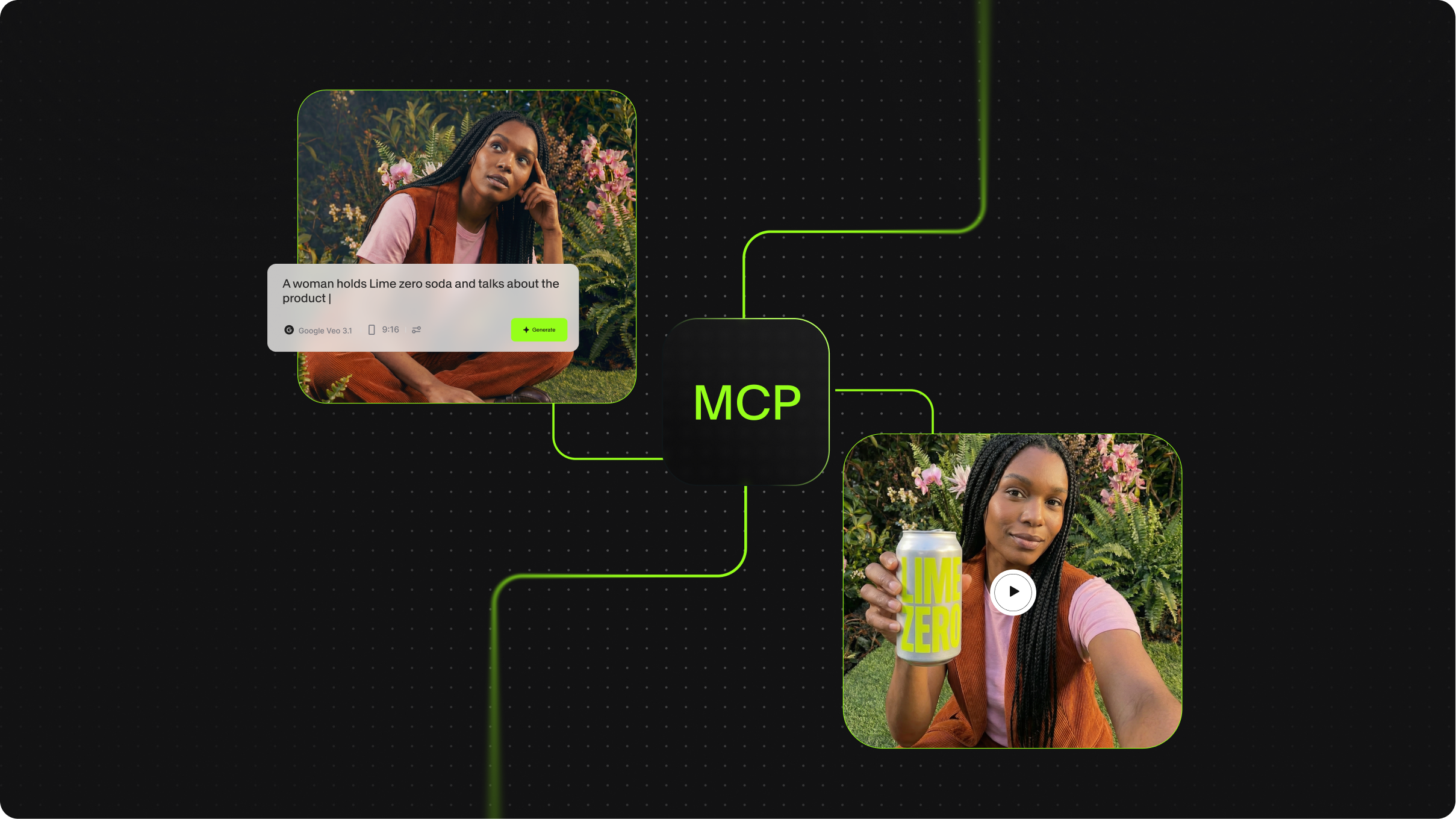
Update the caption colors to match my brandbook [IMG]
Using the Pinterest MCP, pick the references that best match my [VIDEO] topic, then run 3 agents to execute the top matches pixel-perfectly
What you can build with OpenEdit
OpenEdit edits footage. It does not generate it. Bring your own from wherever you already work. A few ways it gets used.
- Daily social output. Ship a week of Reels, TikToks, Shorts, or podcast cuts straight from your agent without paying for another subscription to do it.
- Branded assets that stay on brand. Give OpenEdit a reference image or your brandbook once, and every clip after it matches.
- A client's week, done in an afternoon. Run the batch through a multi-agent session instead of paying studio rates for the same output.
- Video inside the tools you already run. Connect any MCP or API, make OpenEdit part of the workflow and skillset you already have, or build something new around it.
V1 is built around captions, but the engine already renders motion graphics, charts, and brandbook-matched styling. That is worth pushing on, and it is also where OpenEdit is roughest today. If you want a talking head from a script rather than footage you already have, that is a different job: the VEED MCP does it with Fabric, which is paid and burns credits like every other text-to-video model.
How OpenEdit compares
VEED built its own HTML-to-video renderer and runs it locally on your machine. You style captions in HTML and CSS, but there is no headless browser in the pipeline. Most agent-native video tools drive Chrome instead.
In VEED's early internal benchmarks, OpenEdit ran up to 2.2x faster than tools that drive Chrome. That is VEED's own testing, not a published comparison.
Good to know before you start
OpenEdit is in beta. Here is where it stands today.
- Apple Silicon Mac on macOS 26 (Tahoe) only. Not Intel, not earlier macOS. Windows and Linux support is something VEED intends to build, and how it gets prioritized depends on the demand.
- Agent-agnostic. Tested with Claude Code, Codex, and Gemini. The skill loads its AGENTS.md explicitly, so it is not tied to one model.
- V1 is built around captions. The engine already renders motion graphics, charts, and brandbook-matched styling. That is worth pushing on, and it is also where OpenEdit is roughest today.
Is OpenEdit open source?
The OpenEdit editor is under Apache-2.0. The renderer binaries are closed source, under PolyForm Shield 1.0.0, and you can sell what you make with them at no cost to VEED. You are not locked to them either: composition does not depend on the renderer, so if a closed binary is a dealbreaker, you can render through Chrome instead. Both licenses are in the repo.
What are the system requirements?
OpenEdit runs on Apple Silicon Macs on macOS 26 (Tahoe). Not Intel, and not earlier versions of macOS. Windows and Linux support is something VEED intends to build, and how it gets prioritized depends on the demand.
What can OpenEdit do today, and what is coming?
V1 is built around captions: transcribing, styling, and rendering subtitles onto footage you already have, then reworking them as you ask. The engine already renders motion graphics, charts, and brandbook-matched styling, which is worth pushing on and is also where it is roughest. For generating video from a script rather than editing existing footage, the VEED MCP does that with Fabric, which is paid.
Powered by VEED Engine
What the licenses mean for you
The OpenEdit editor is open source under Apache-2.0. Read it, fork it, change it, ship it.
The renderer binaries are closed source, under PolyForm Shield 1.0.0. You can sell what you make with them, at no cost to VEED. You are also not stuck with them: composition does not depend on VEED's renderer, so if a closed binary is a dealbreaker, you can render through Chrome instead.
Both licenses are in the repo.
Setup is one command, and your agent takes care of the rest. Open it, point it at a clip, and ask for subtitles.
Get OpenEdit on GitHub